RAD: Rapid Artifact Design
A concept tool that takes a federal UX research engagement from brief to executive summary and exports every artifact as a client-ready, Steampunk-branded deck. Demoed to Steampunk's AI Champion Network.
Research
Our design researchers were spending more time formatting research than doing it. On federal engagements, every stakeholder map, journey map and usability readout was rebuilt by hand in PowerPoint, often from scratch.
Three costs kept showing up. Hours went to layout and brand cleanup instead of synthesis. Each team produced its own version of the same artifact, which blurred the practice's story with clients. And findings lived in scattered notes and decks, so evidence was hard to trace from session to insight.
The environment added a hard constraint. Federal clients limit installs, cloud tools and data handling, so whatever we built had to run with almost nothing.
Design & Testing
I treated RAD as a product, not a template library. Three principles set the direction: zero footprint (one HTML file, no install, no login), project-agnostic by design, and brand built into the export engine so every deck comes out on-brand automatically.
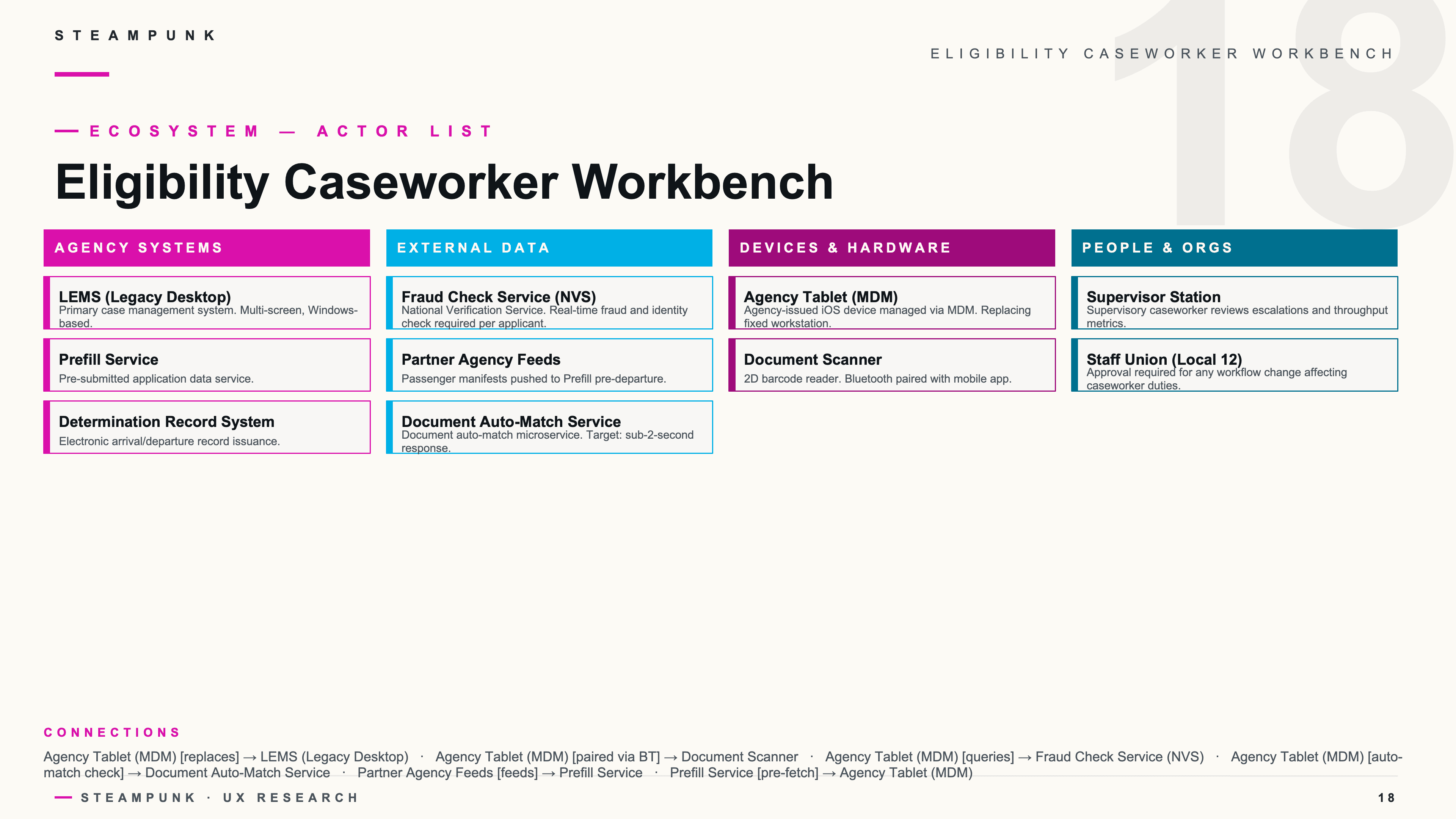
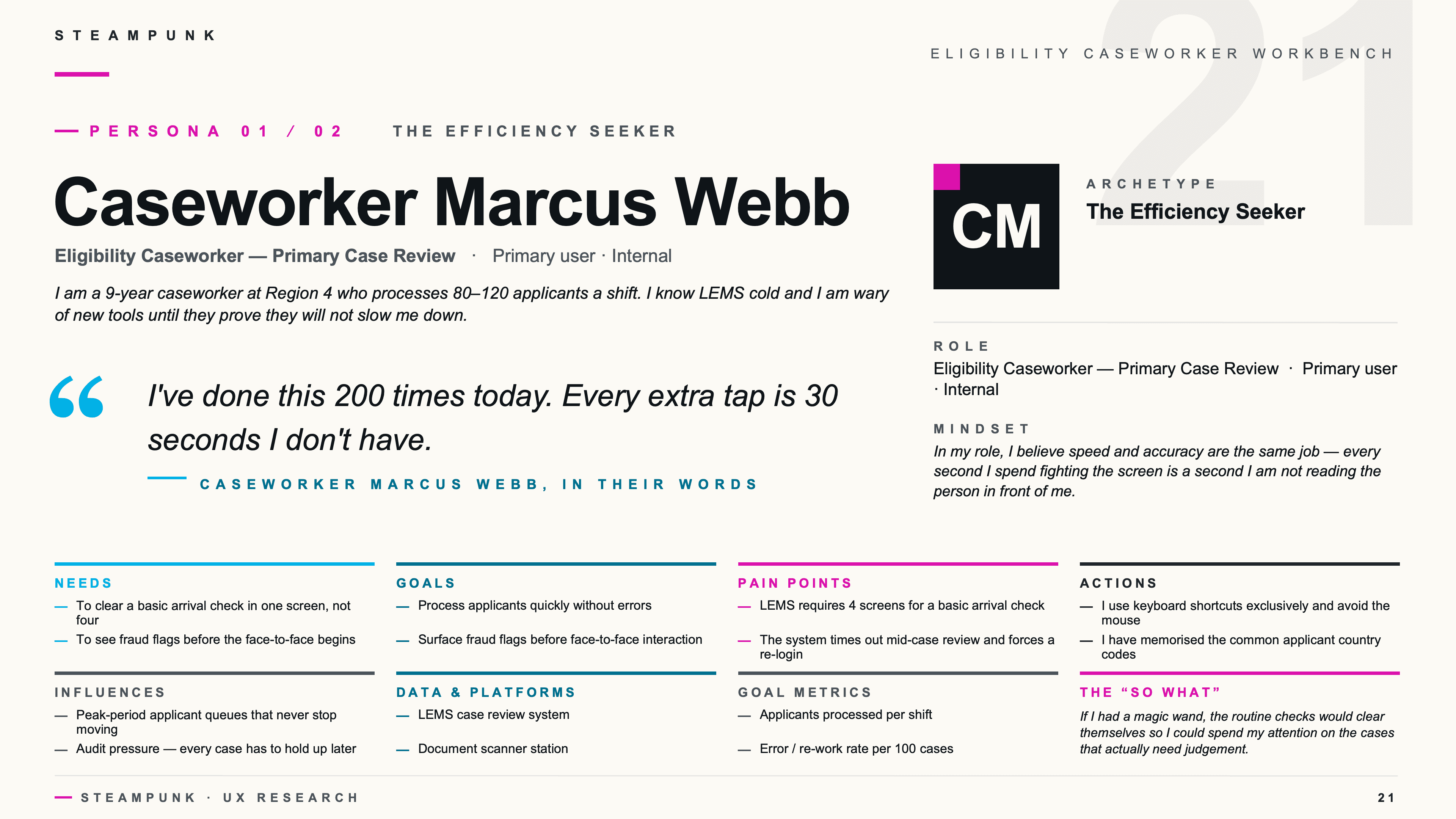
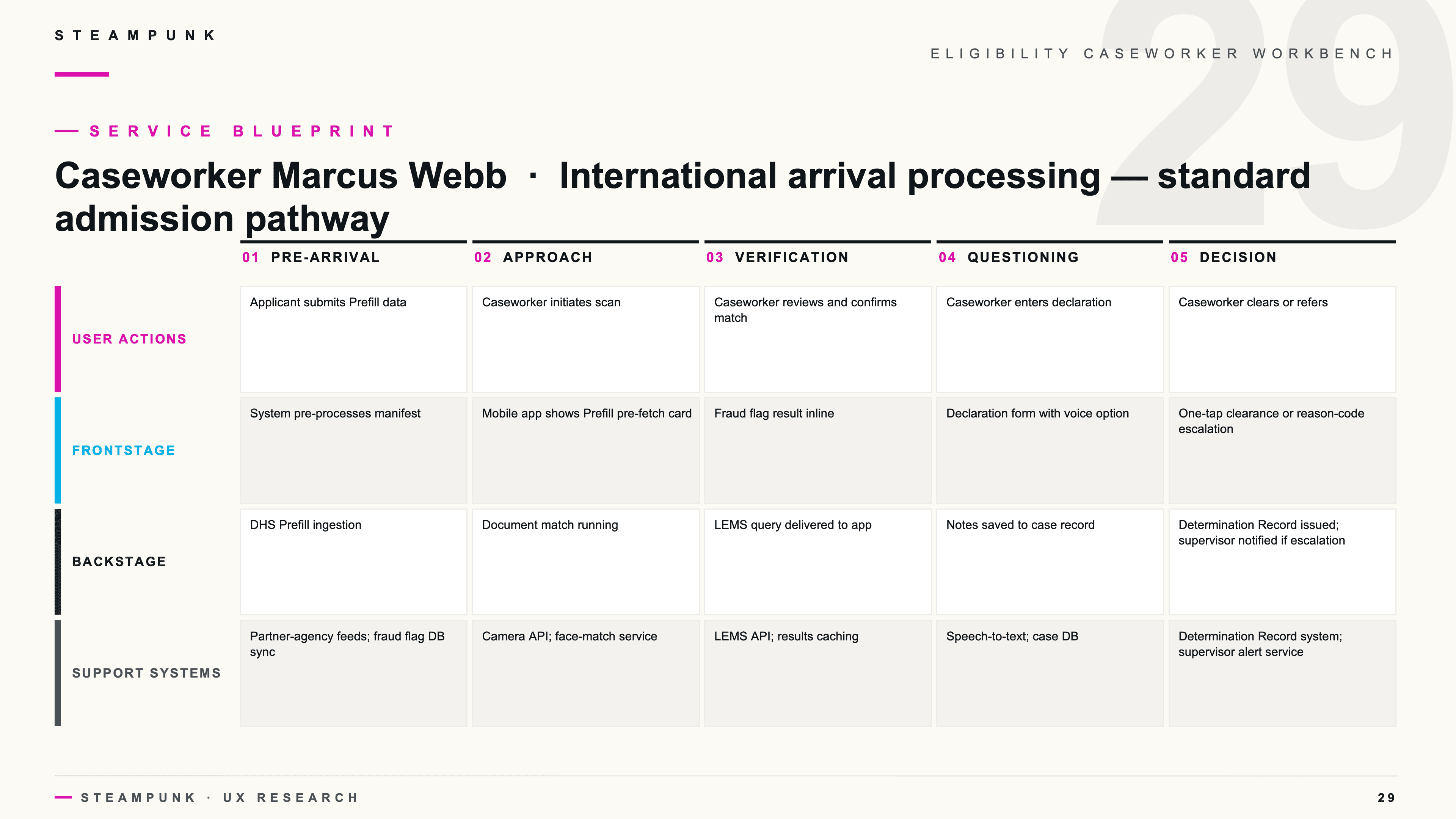
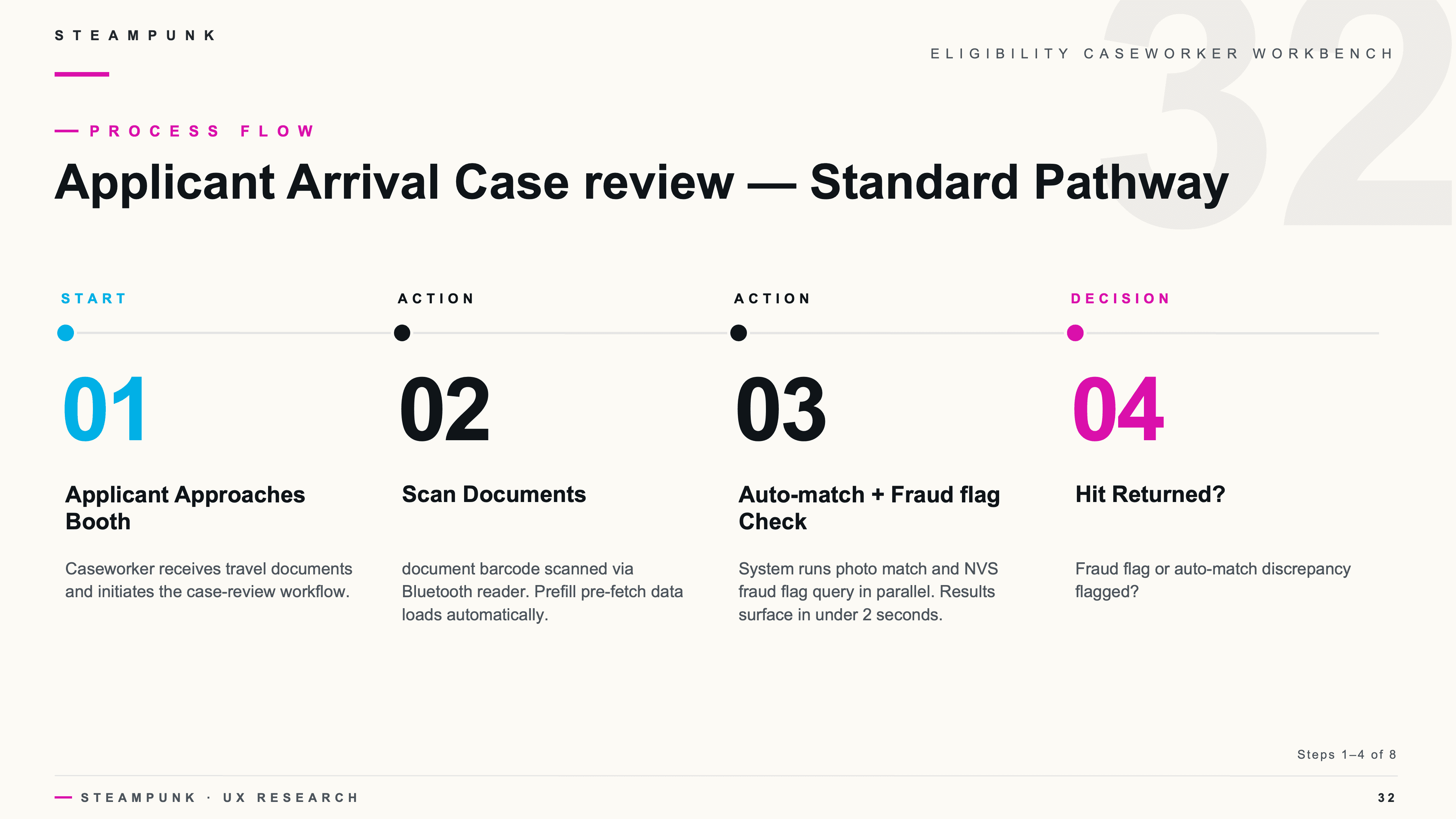
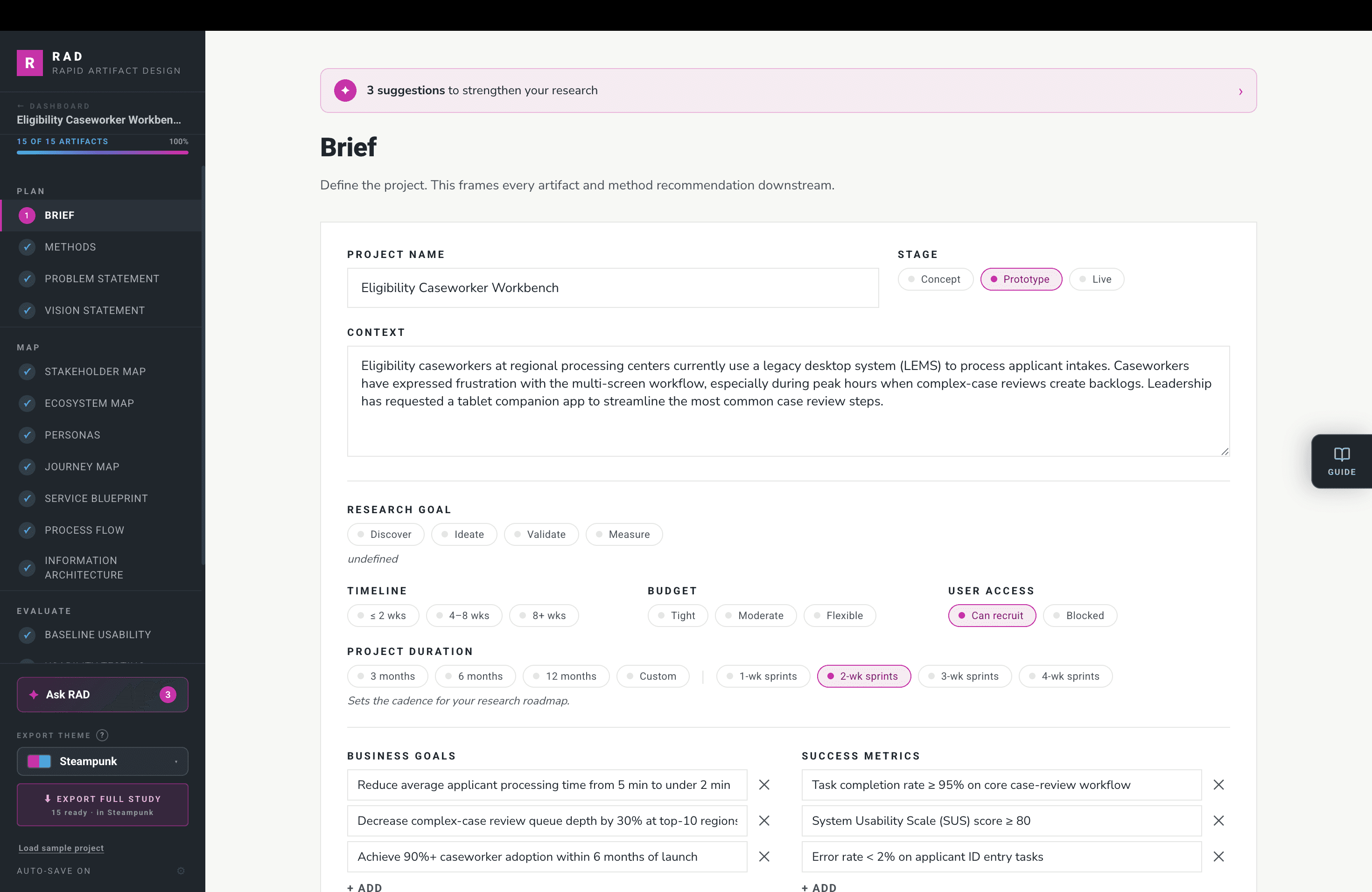
The result is one connected workspace covering the full research lifecycle: planning, system mapping, experience modeling, evaluation and synthesis. That spans 18 modules, from discussion guides and ecosystem maps to service blueprints, usability and WCAG reviews, and an executive summary dashboard. A findings store links every insight to the session it came from, and AI-assisted synthesis gets researchers to a first draft faster while they stay the author.
The build itself was AI-native. RAD began as a studio prototype and grew over dozens of versioned iterations, each one focused change: I directed, Claude wrote the code, I tested the build, and the next change followed.
A few decisions shaped how it feels to use. I explored a dark theme and dropped it, since federal clients present on projectors and print decks. Steampunk pink is reserved for primary actions, giving a dense tool one reliable signal for the next step. Export sits in the same place on every page, and when a section isn't ready the button stays visible but disabled, with a hint explaining why.
Impact
RAD is a working concept, not yet an operational tool. I demoed it to Steampunk's AI Champion Network, and it's now being socialized across the design and strategy practice as a model for how research delivery could work.
The demo made the idea concrete. Instead of describing a faster, more consistent way to produce deliverables, I could show a full engagement moving from brief to branded deck in one place. That shifted the conversation from whether AI-native tooling could work for federal research to what it would take to put it into practice.
Takeaway
The bottleneck in research delivery isn't insight, it's packaging. RAD is my case for removing that friction so researchers can spend their time on the work clients actually pay for.
Building it also changed how I design. I could test an idea in a working product the same day I had it, so decisions came from use rather than debate. A functioning concept makes a stronger argument than any slide about what AI could do for a practice.
Methods
- Workflow analysis
- Rapid prototyping
- AI-assisted development
- Iterative build-and-test cycles
- Visual direction exploration
- Design system application
- Concept demo and stakeholder feedback
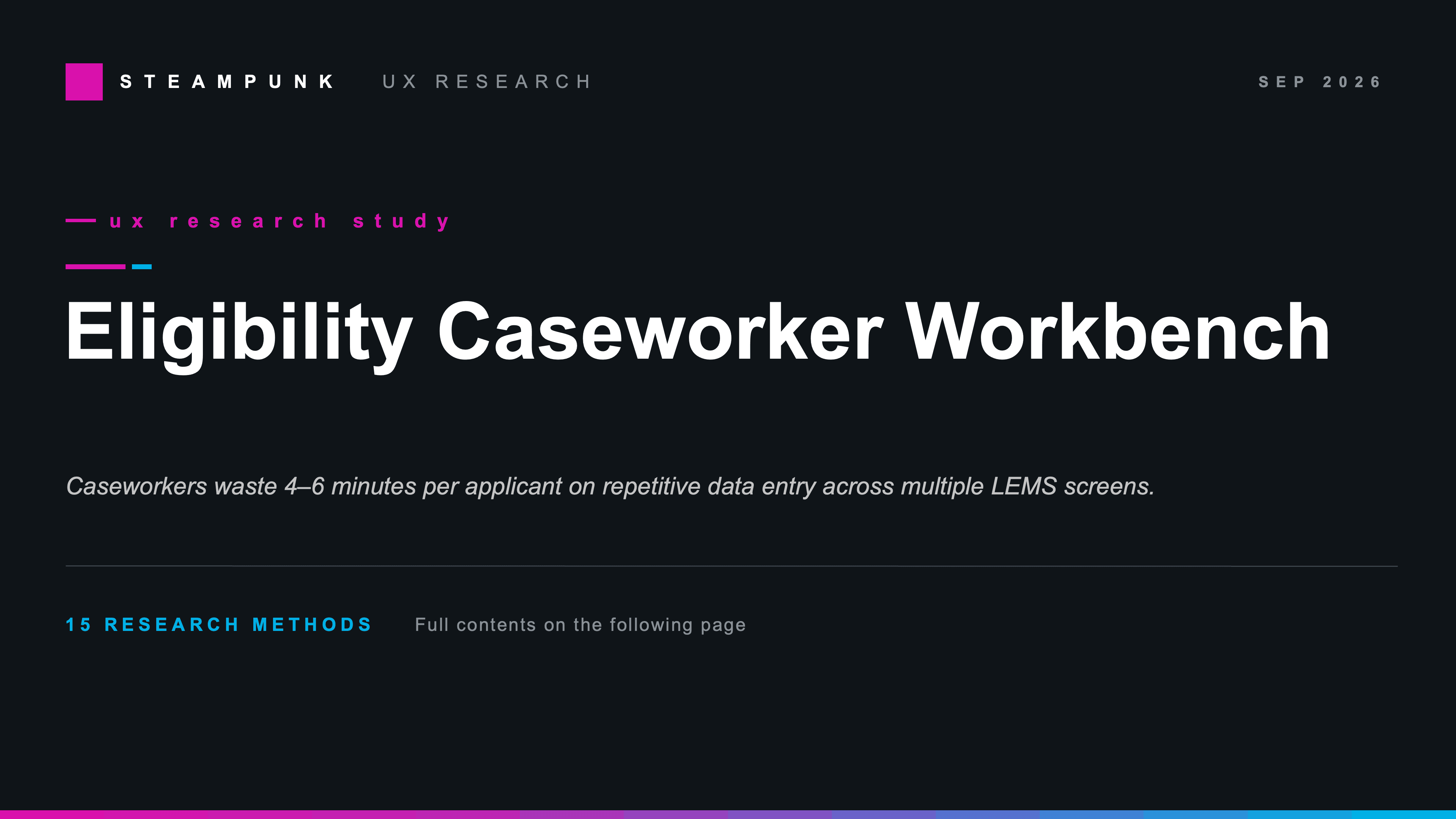
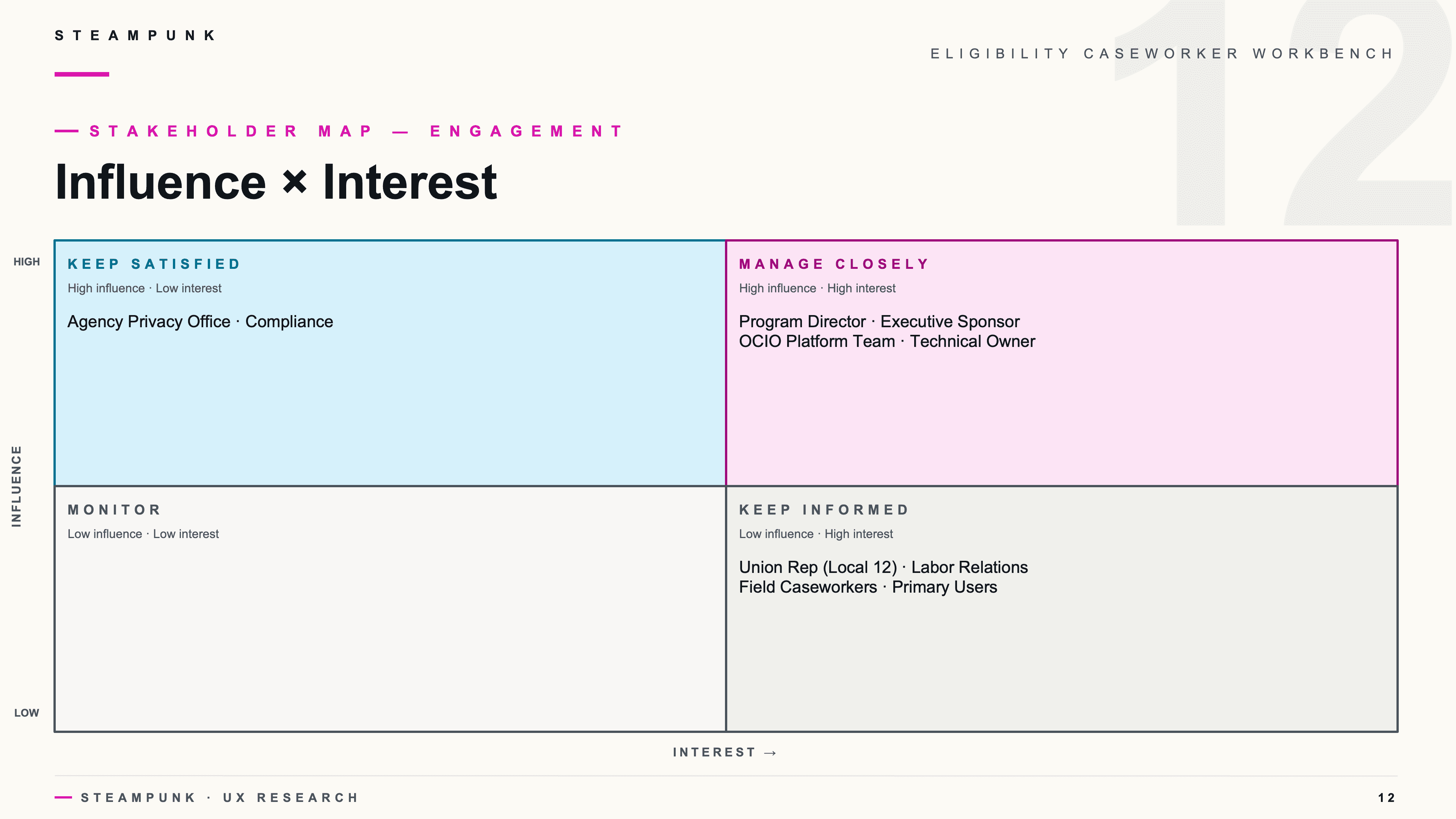
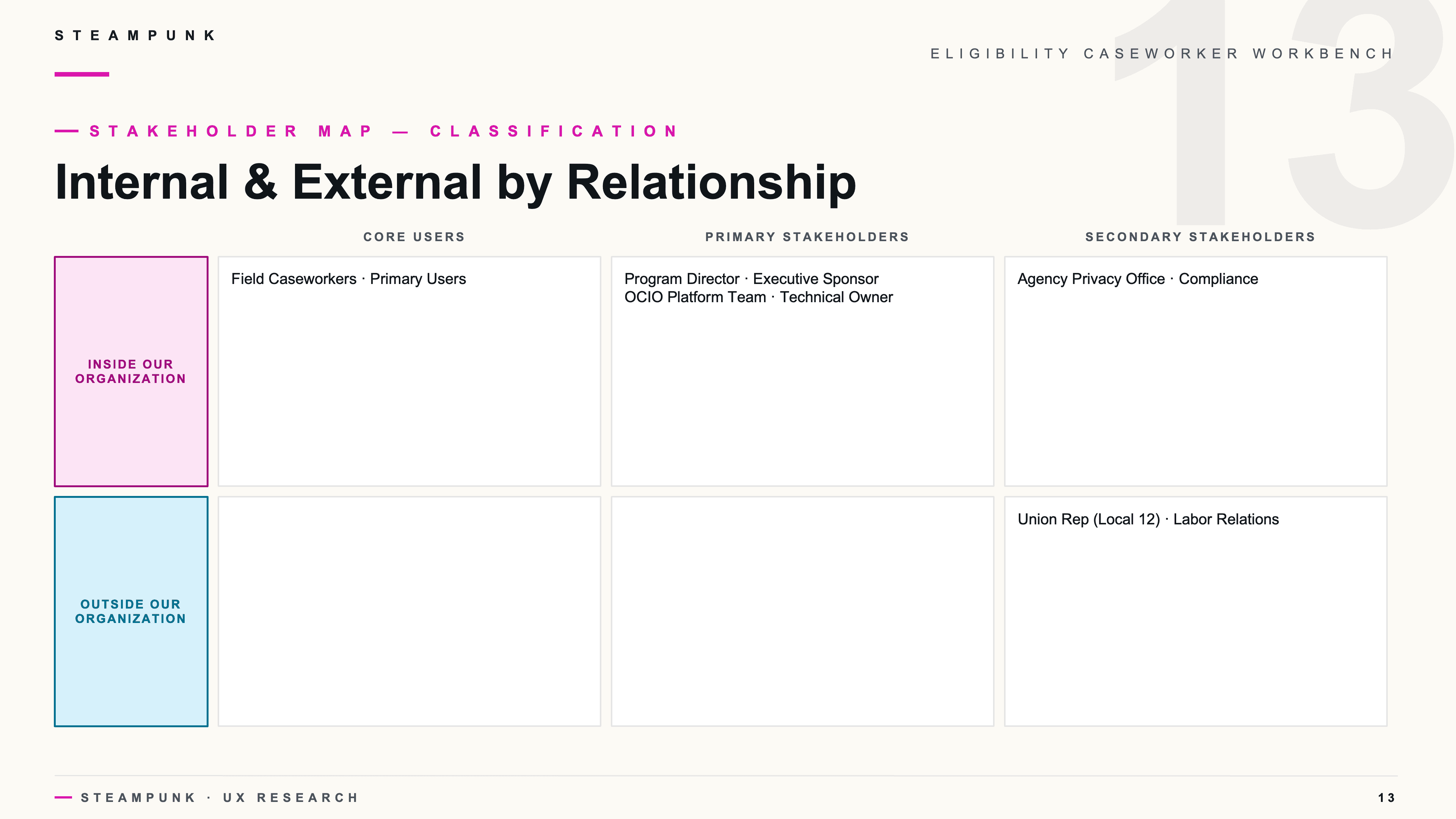
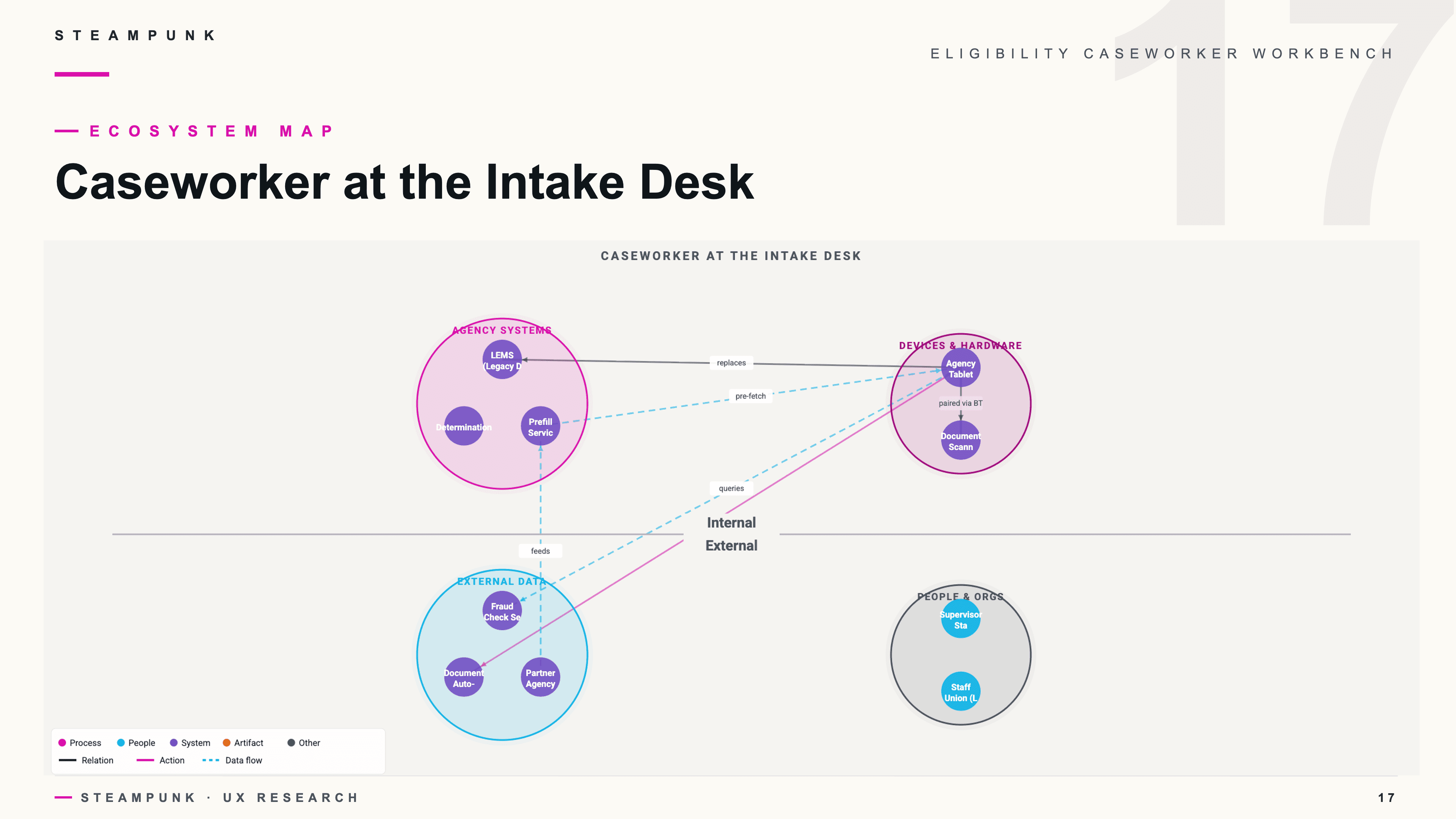
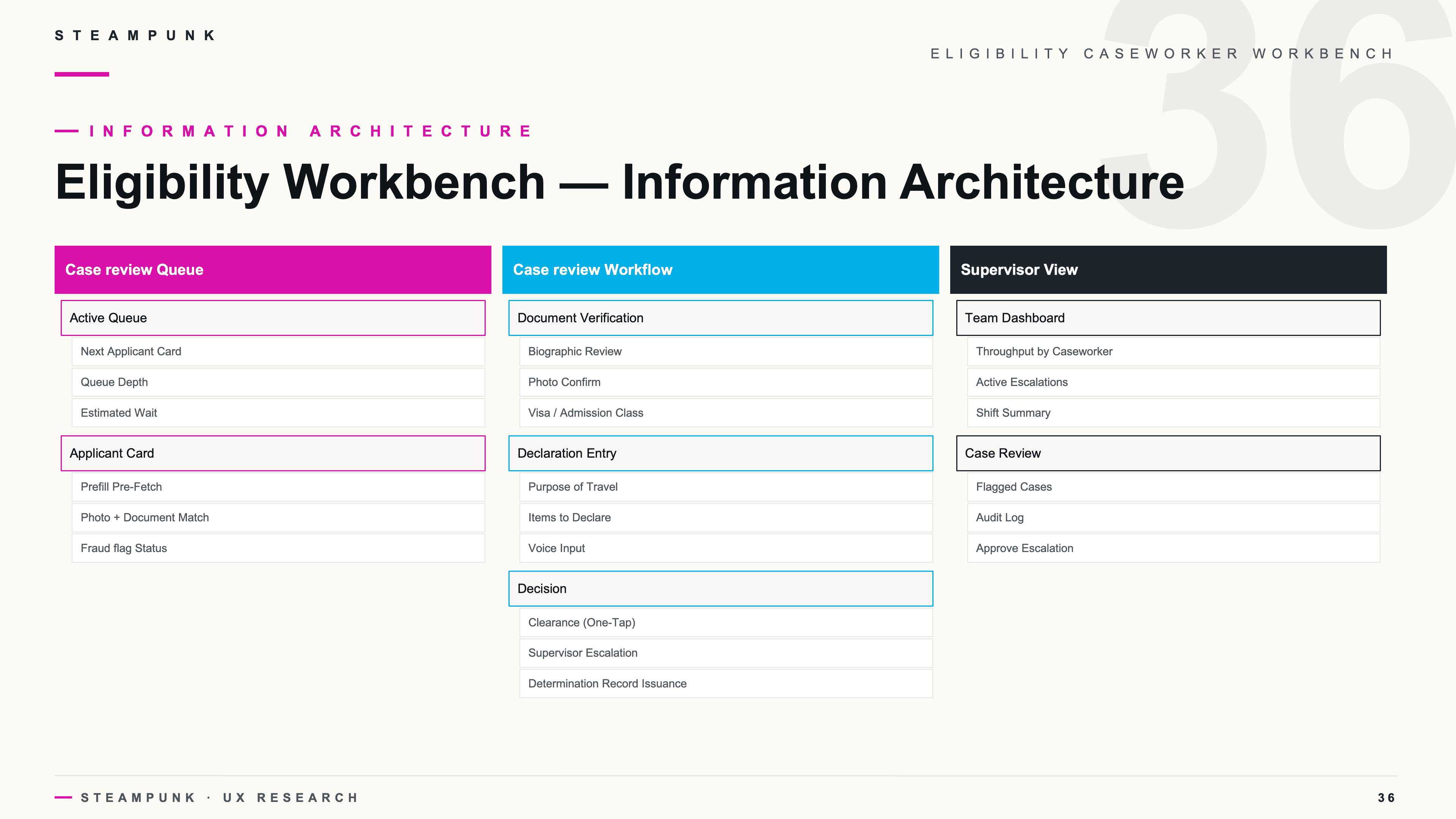
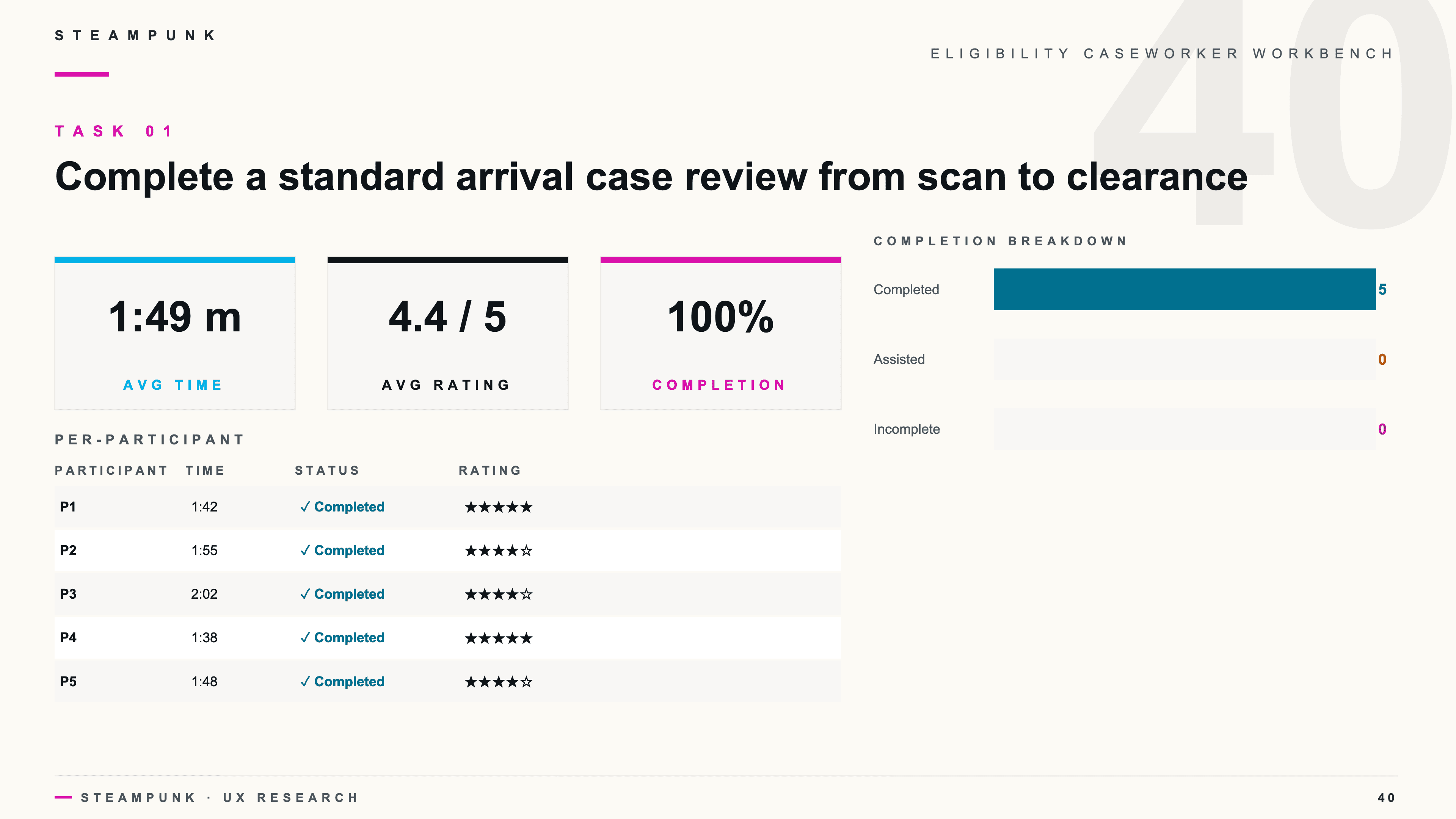
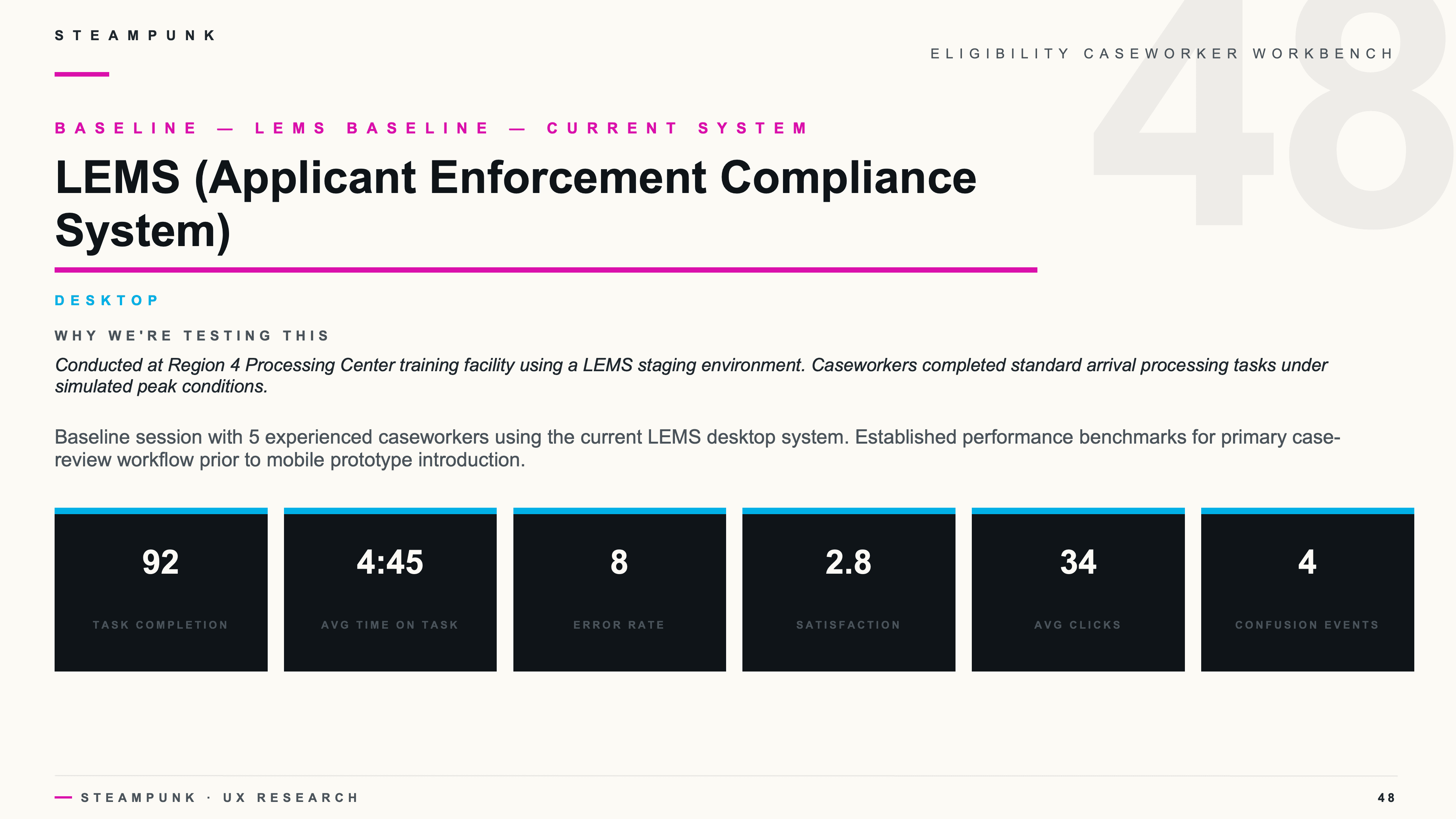
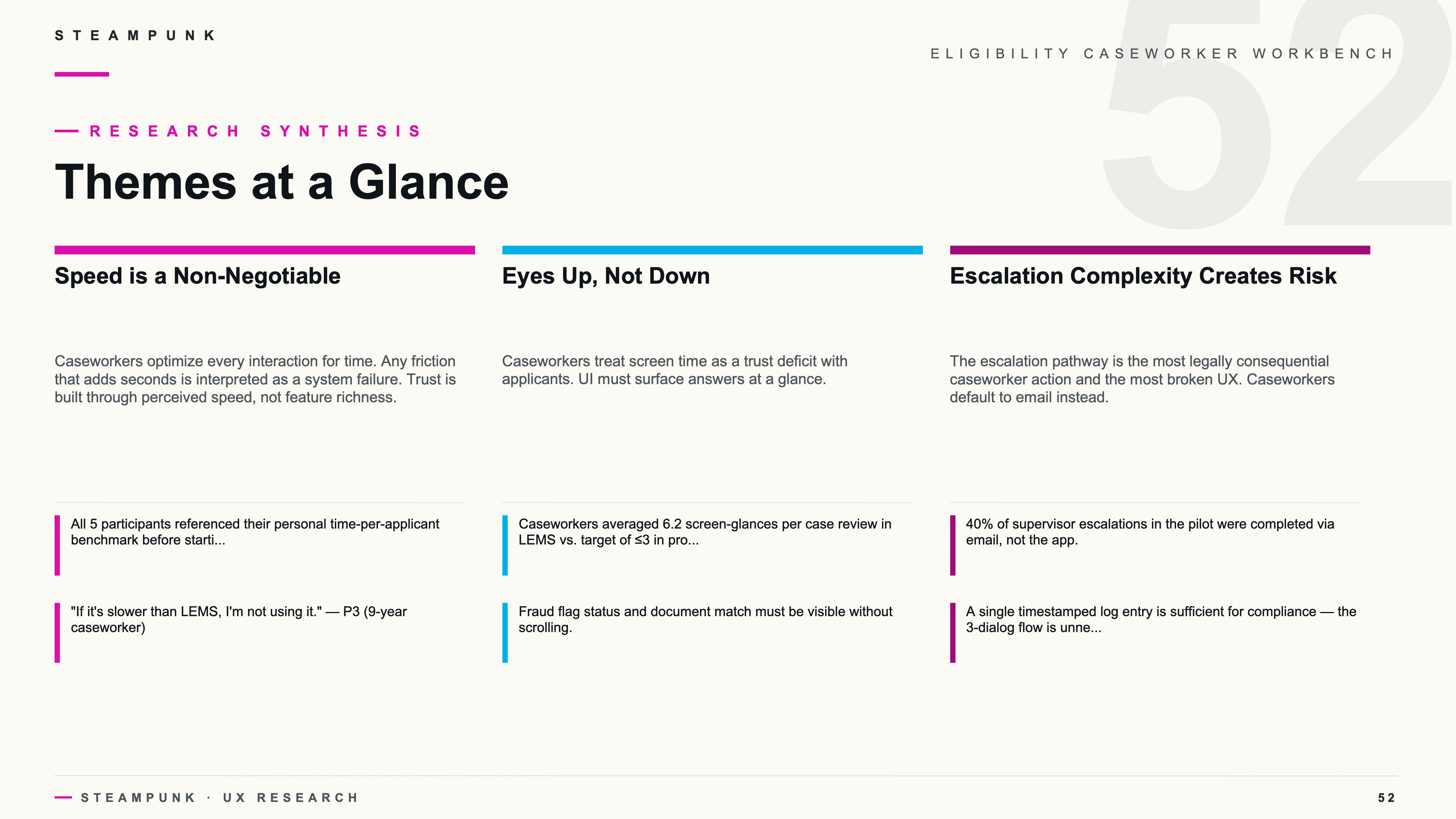
PowerPoint exports
Every slide below was exported straight from RAD as a PowerPoint deck. The export engine applies the Steampunk brand automatically, so each artifact comes out client-ready.